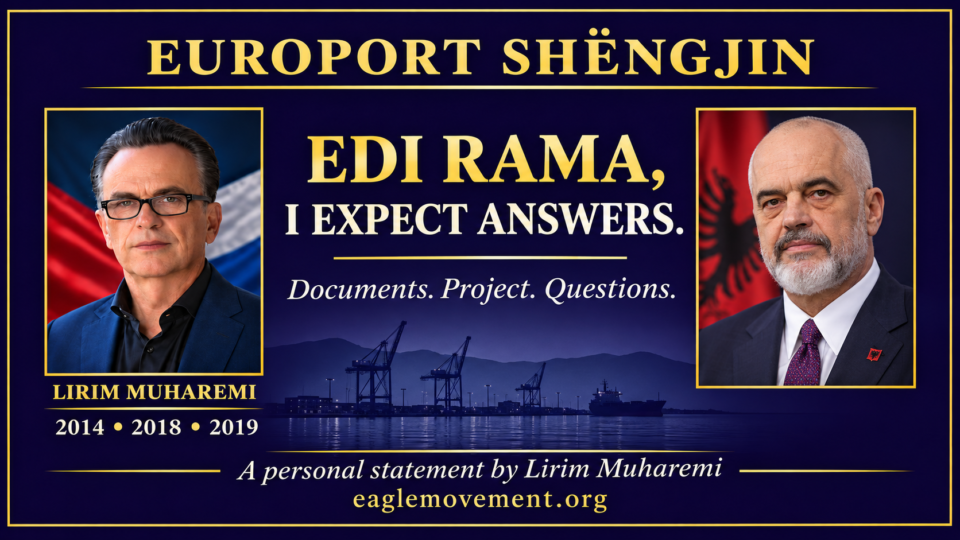
Lirim Muharemi seeks verifiable explanations about the handling of his legal remedies in case II K 30800/2019. The focus is the setting aside of a monetary penalty in 2024 and the subsequent chronology of appeals, costs orders and the movement of the court file.
The Supreme Court set aside the penalty order
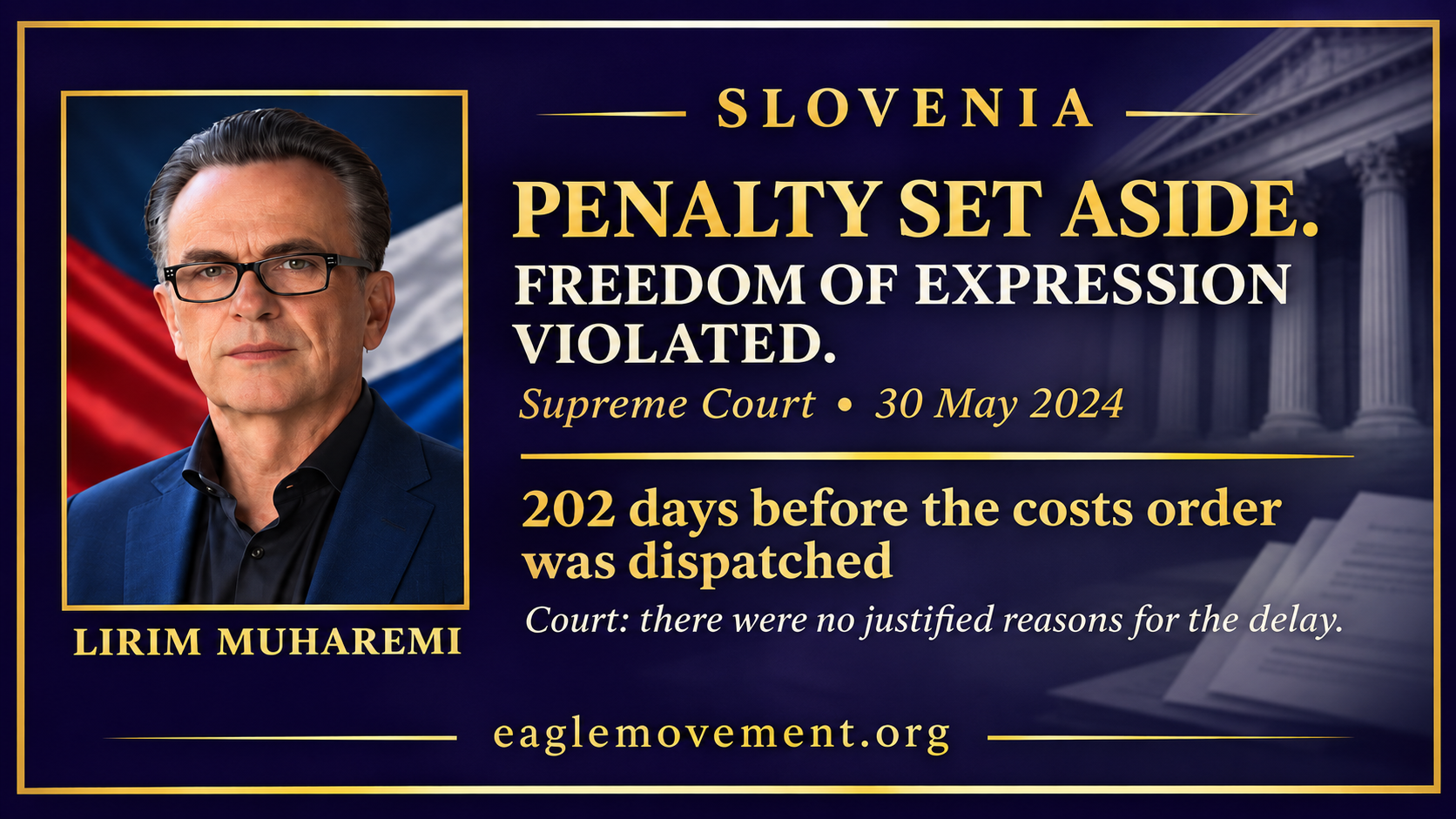
By its decision II Kp 30800/2019 of 30 May 2024, the Supreme Court of the Republic of Slovenia allowed the appeal of the injured party acting as prosecutor and set aside the second-instance court’s monetary penalty order. Muharemi had been ordered to pay EUR 1,000 because of statements in his appeal.
In paragraphs 14 and 15 of its reasoning, the Supreme Court expressly found that imposing the monetary penalty had violated Muharemi’s right to freedom of expression. It assessed his statements in the context of the entire appeal and emphasised that they primarily criticised the conduct of the trial and were supported by reasoned arguments. It set aside the penalty order because of that violation.
Setting aside the penalty order does not mean that the judgment on the criminal charge was overturned, compensation awarded or all of Muharemi’s allegations confirmed.
Subsequent appeals and costs orders
In his supervisory complaint of 30 September 2026 and request for additional explanations of 12 November 2026, Muharemi identifies three legal remedies: an appeal dated 15 July 2025 and costs-related appeals dated 3 and 18 February 2026.
In notice SuNp 2/2026 of 20 October 2026, Helena Mejač, President of the Local Court in Kamnik (Okrajno sodišče v Kamniku), confirmed that the costs order was prepared and signed on 10 July 2025 but dispatched by court staff only on 28 January 2026. The court expressly found that there were no justified reasons for that delay. There were 202 days between preparation and dispatch, and 203 days until service on 29 January 2026.
The notice also confirms that the legal remedy dated 5 January 2024 reached Kamnik on 6 March 2024. The order dismissing it as inadmissible is dated 3 June 2025. Muharemi seeks explanations about the intervening procedural steps and inconsistent dates; the interval alone is not presented as proof of intentional conduct.
The court also explained that the costs order was not enforceable pending determination of the appeals and could not provide a basis for enforcement. It announced procedural steps to accelerate the matter, referring to a period of no more than four months from receipt of the supervisory complaint. The established dispatch delay does not automatically establish the judge’s personal responsibility.
The court reported that the file had been sent to the Higher Court
The request of 12 November 2026 summarises a letter from Judge Barbara Kodela Kolar dated 6 November 2026: the file was sent to the Higher Court in Ljubljana (Višje sodišče v Ljubljani) on 28 October 2026 for determination of the appeal against dismissal of a legal remedy. Following its return, submission to a panel of the District Court in Ljubljana (Okrožno sodišče v Ljubljani) is planned for the costs-related appeals.
Muharemi acknowledges that the notice partly explains the position. He nevertheless seeks answers about earlier intervals, measures taken and the handling of the remaining appeals. The documents reviewed for this article did not establish the subsequent outcome of those legal remedies.
Questions for the responsible institutions
- Local Court in Kamnik: what steps were taken on each appeal, what explains the intervals and which organisational measures were implemented? What is the status of applications to defer or stay enforcement and of records concerning finality and enforceability?
- Higher Court in Ljubljana: when did it receive the file, under which reference is the appeal being considered and what is its current status?
- Ministry of Justice: has it examined the organisation of court business within its powers, and which findings or measures can it report?
These are proposed public questions. This article does not claim that they have already been sent to the courts and ministry as journalistic enquiries or that those institutions have refused to answer. Any responses received should be presented alongside the applicant’s statements.
The right to an answer and transparency
The central request is for a documented account of how the legal remedies were handled. Court administration and the organisation of work must be distinguished from independent judicial determination of the appeals.
Muharemi’s position: I do not demand a predetermined outcome. I demand a verifiable explanation of what happened to my legal remedies.